
Most growing businesses in Kenya run on a patchwork. Sales in Excel, stock in a notebook, customers in someone’s WhatsApp, invoices in a system that does not talk to any of it. It works until it does not. Digital 4 Africa sets up, configures, and integrates the ERP and CRM systems that put your whole operation in one place, built for Kenyan tax rules and Kenyan payment habits, without the licence fees that make enterprise software feel out of reach.
ERP and CRM Systems for Businesses in Kenya and Africa
ERPNext and SuiteCRM implementation. Open source, eTIMS ready, M-Pesa connected.

Trusted by brands across Africa. Built to speak their language.



What Is an ERP System?
An ERP, or Enterprise Resource Planning system, is software that runs your internal operations from one database. Accounting, inventory, purchasing, manufacturing, HR, and payroll all share the same records, so a sale updates your stock and your books at the same moment. One set of numbers, one version of the truth, no reconciliation weekend.
What Is a CRM System?
A CRM, or Customer Relationship Management system, runs everything that faces your customer. Leads, quotes, follow ups, deals, contracts, and support tickets sit in one place, so your pipeline survives when a salesperson leaves and takes their phone with them.
The Problem
Busy Everywhere, Certain Nowhere
Your finance team closes the month three weeks late. Nobody can say what is actually in the store without walking there. A customer calls and three people give three answers. Quotes live in one person’s laptop. And when KRA asks a question, you go looking for paper. The problem is rarely effort. It is that the business has no single system holding it together.
What Is the Difference Between an ERP and a CRM?
An ERP manages what happens inside the business. A CRM manages what happens between you and the customer. The ERP knows whether you have the stock and what it cost you. The CRM knows who asked for it and when you promised to deliver. Most businesses need both, connected, so a won deal in the CRM becomes a real order in the ERP without anyone retyping it.
eTIMS Is No Longer Optional
Why 2026 changed the maths on ERP in Kenya
From 1 January 2026, KRA validates the income and expenses declared in income tax returns automatically, checking them against eTIMS invoice records, withholding tax returns, and customs import data. Expenses that are not supported by a compliant eTIMS invoice can be disallowed. A disallowed expense is not a warning letter. It raises your taxable income, and the tax falls due on profit you never made.
For a business issuing a handful of invoices a month, manual eTIMS entry is annoying. For a distributor, retailer, or printer pushing hundreds of invoices a week, it is not realistic. This is the practical reason ERP moved from a nice-to-have to a compliance requirement in Kenya, and it is why we lead with ERPNext.
Our ERP Services
From first scoping call to a system your team actually uses, here is the full stack
1. Scope and Set Up
Before anything is installed, we map how your business actually runs today.
2. Make It Kenyan
Global software, local rules. This is where most implementations fall over.
3. Move Your Data In
A new system with old chaos inside it is just faster chaos.
4. Connect and Support
Go-live is the start of the relationship, not the end of the project.
Our CRM Services
Put your pipeline somewhere it cannot walk out of the building
1. Set Up and Structure
A CRM only works if it matches how your team actually sells.
2. Capture Every Lead
In Kenya, leads arrive on WhatsApp. Your CRM should know that.
3. Connect to the Business
A CRM that does not talk to your ERP is just a nicer address book.
4. Adopt and Improve
Most CRM projects fail on adoption, not on software. We plan for that.
Platforms We Work With
We lead with open source, but we will work with whatever you already own
ERP Systems
ERPNext is our lead platform. The rest we implement, integrate, and support.

ERPNext
Our lead ERP. Open source, no per-user licence, with mature Kenyan eTIMS and payroll localisation.

Odoo
Modular and popular with Kenyan SMEs. Strong when you want to start with two modules and grow.
Microsoft Dynamics 365
The corporate choice where Microsoft 365, Teams, and Power BI are already the standard.

Sage
A long-established name in East African distribution and manufacturing finance. We integrate and report on it.

Zoho
ERP-lite for small teams. Books, Inventory, and Projects together cover a lot for very little.
CRM Systems
SuiteCRM is our lead platform. We also build on the cloud CRMs you already know.
SuiteCRM
Our lead CRM. Open source, self-hosted, unlimited users, and your customer data stays on your server.

HubSpot
The easiest to adopt and the strongest for marketing. Watch the cost as your contact list grows.
Bitrix24
CRM plus tasks, chat, and an intranet in one. Good value when you want collaboration bundled in.
Zoho CRM
Affordable, capable, and a natural fit if your business already runs on the Zoho suite.
Integrations That Make It Kenyan
The connections that decide whether the system fits how business is actually done here.
KRA eTIMS
Compliant invoices raised and transmitted from inside your ERP, not typed twice into a portal.

M-Pesa & Daraja API
Paybill and Till collections matched to invoices, plus B2C payouts and automatic reconciliation.

WhatsApp Business
Quotes, invoices, and delivery updates sent where your customers already reply fastest.

Banks & Payment Gateways
Bank feeds, card gateways, and multi-currency for businesses selling across East Africa.

AI & Automation
n8n workflows and AI agents that read your ERP data, chase debtors, and write the reports.
Why We Lead With Open Source
Not ideology. Arithmetic.
Why ERPNext?
Proprietary ERPs charge per user, per month, forever. For a Kenyan business with forty staff, that licence line alone can outrun the entire implementation budget in the second year, which is why so many companies buy an ERP and then quietly restrict who is allowed to log in.
ERPNext removes that line. There is no per-user licence, so you pay for implementation, hosting, and support only. Everyone who needs the system gets the system. On top of that, it has genuine Kenyan localisation: maintained integrations for KRA eTIMS through both the online and virtual sales control unit routes, statutory payroll reporting, and VAT withholding handling. The code is yours to extend, and if you ever decide to work with someone else, your data and your customisations go with you.
Why SuiteCRM?
Cloud CRMs are excellent until the invoice arrives. Pricing is per seat, so the moment you want the whole sales team, the support desk, and two directors looking at the same pipeline, the monthly cost stops being a rounding error.
SuiteCRM is open source and self-hosted, which means unlimited users and no renewal creep. It also means your customer database sits on infrastructure you control, which matters for organisations with data residency obligations under the Kenya Data Protection Act. It is not as pretty as HubSpot out of the box. We fix that with proper configuration, and you keep the difference.
Other Options; Microsoft, Zoho, Hubspot & More
To be fair to the alternatives, open source is not automatically the right answer. If your organisation is standardised on Microsoft 365 and Power BI, Dynamics 365 will feel native in a way ERPNext will not. If your marketing team lives inside campaign automation, HubSpot earns its price. If you are a five-person service business, Zoho will do the job for less than the cost of a proper ERP implementation. We will tell you when that is the case, and we will implement it for you anyway. What we will not do is sell you a licence you do not need.
Case Study: Brand Haven Limited
Turning a busy Nairobi print floor into a process you can see.
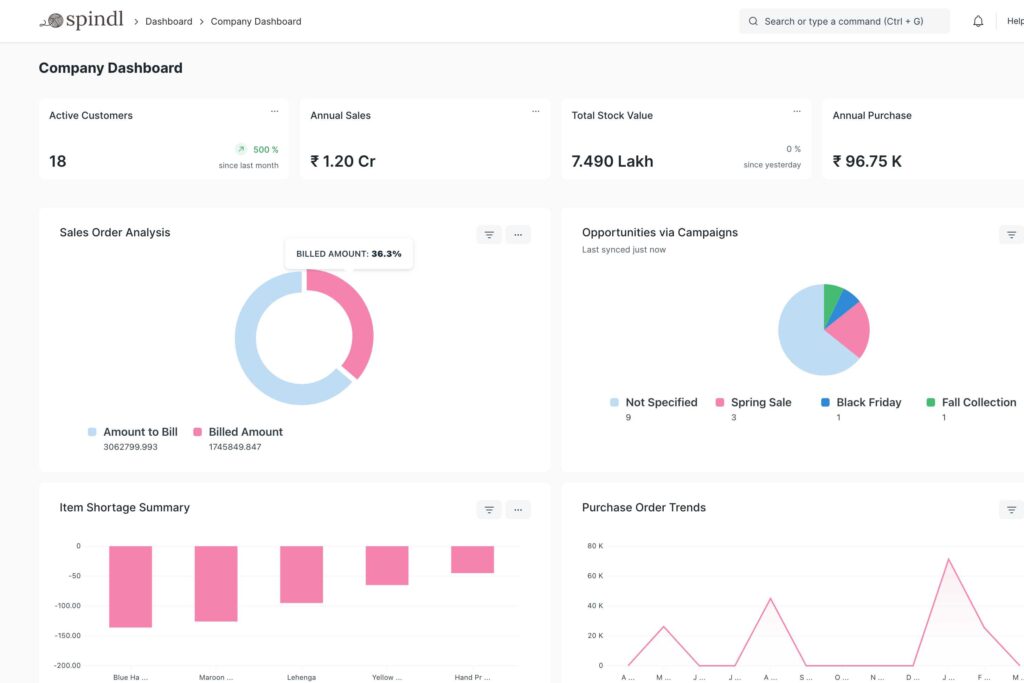
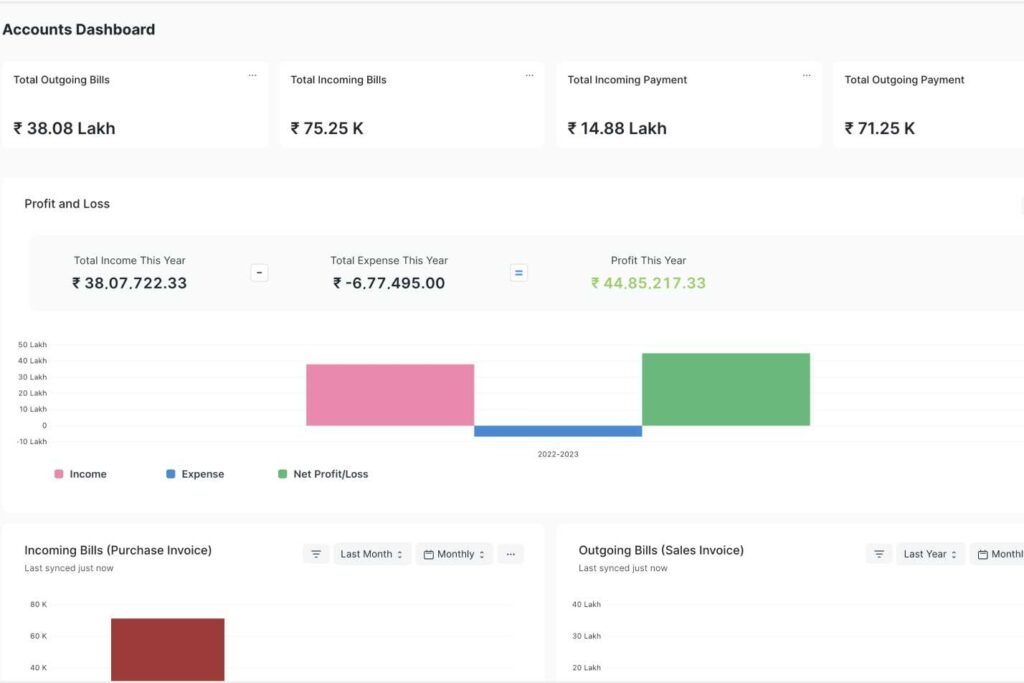
Brand Haven Limited is a Nairobi branding and printing company serving clients across East Africa. Printing is a deceptively complex business. A single job moves through enquiry, artwork, quotation, approval, production, quality check, and delivery, and each stage involves different people, different materials, and a client who would quite like an update. When that flow lives in WhatsApp threads and a shared spreadsheet, jobs do not get lost dramatically. They get lost quietly.
We started where every good implementation starts, with the process rather than the software. Working with the team, we documented and structured their operation across seven stages, from first client enquiry to final delivery, and produced a process flow document and diagrams that gave everyone a shared map of how work actually moves through the business. That map is what an ERP configuration is built on. Without it, you are just digitising confusion.
The result is an operation where a job has one record, one status, and one owner at every stage, where quotations follow a standard structure instead of a personal one, and where the person at the front desk can answer “where is my order” without walking to the production floor. The work was never the problem at Brand Haven. Seeing it was.
What Does It Cost?
Three parts, stated plainly, so you can budget before you talk to us
These are honest starting points, not a menu. A single-branch CRM rollout for a sales team of eight sits near the bottom of that range. A multi-branch ERP with manufacturing, payroll, and eTIMS sits well above it. Book a consultation and we will scope it properly and give you a fixed quote.
Let's Put Your Business in One System
Book a free consultation and we will map what you have before we recommend anything
Most ERP and CRM projects fail for the same reason. Somebody sold software before anybody understood the process. We work the other way round. The first conversation is about how your business actually runs, where the delays are, who is retyping what, and what KRA now expects from your records.
Only then do we recommend a platform, and sometimes the recommendation is smaller than you expected. Book a free consultation with Digital 4 Africa. No jargon, no licence pitch, no obligation. Just an honest look at your operation and a clear view of what it would take to put it in one place.
FAQs About ERP and CRM Systems in Kenya
Frequently Asked Questions About Our ERP and CRM Implementation Services
An ERP in Kenya costs across three lines: a one-off implementation fee, ongoing support, and software or hosting. With us, ERP implementation starts from KES 350,000, followed by a three-month support retainer from KES 40,000 per month. If you choose ERPNext there is no licence fee at all, only hosting from around KES 10,000 per month. Proprietary systems like Dynamics or Sage add a per-user subscription on top, which is usually where budgets quietly break in year two. We quote all three lines up front so you can see the five-year picture, not just the first invoice.
For most small and medium Kenyan businesses, ERPNext is the best starting point. It has no per-user licence, covers accounting, inventory, buying, selling, HR, and payroll in one system, and has maintained Kenyan localisation for KRA eTIMS and statutory payroll. Odoo is a strong alternative when you want to start with two modules and add more later. Zoho suits very small service businesses that need something ERP-like without an ERP budget. The honest answer is that the best system is the one that matches your process, which is why we map the process before recommending anything.
Yes. ERPNext can be integrated with KRA eTIMS through maintained Kenyan compliance applications that connect via either the Online Sales Control Unit or the Virtual Sales Control Unit route, depending on your registration. Once configured, invoices raised in ERPNext are transmitted to KRA automatically and carry the control unit invoice number. This matters more than it used to. Since 1 January 2026, KRA validates the income and expenses in your tax return against eTIMS records, and expenses without a compliant invoice can be disallowed. We handle the registration, the integration, and the testing before you go live.
Yes, and for most Kenyan businesses this is the integration that pays for the project. Using the Safaricom Daraja API we connect your Paybill or Till to the system so incoming payments are matched against open invoices automatically, and we can enable B2C payouts for refunds and supplier payments. What used to be a person comparing an M-Pesa statement to a ledger every morning becomes a reconciliation that has already happened by the time anyone logs in.
An ERP manages what happens inside your business: accounting, stock, purchasing, production, HR, and payroll. A CRM manages what happens between you and your customer: leads, quotes, follow ups, deals, and support. The ERP knows whether you have the item and what it cost. The CRM knows who wants it and what you promised. Most growing businesses eventually need both, connected, so that a deal marked won in the CRM creates a real sales order in the ERP without anyone retyping it.
A focused CRM rollout for a single sales team is usually live in two to four weeks. A full ERP implementation with accounting, inventory, eTIMS, and payroll typically runs eight to sixteen weeks. The variable is rarely the software. It is how clearly your processes are defined and how clean your existing data is. We go live module by module rather than switching everything on one Monday morning, so your team absorbs the change in pieces and you see value before the project ends.
Not necessarily. Sometimes the right answer is to migrate fully, and we will move your customers, suppliers, items, and opening balances across. Other times the right answer is to leave your finance system where it is and integrate it, so the ERP handles operations and your accountant keeps the tool they know. We work with what you have before we suggest replacing it. A migration nobody asked for is the fastest way to lose a team’s goodwill.
It depends on what you are optimising for. SuiteCRM is open source and self-hosted, so you get unlimited users with no per-seat subscription, and your customer data stays on infrastructure you control. That suits larger sales teams and organisations with data residency obligations. HubSpot is easier to adopt, better looking, and considerably stronger for marketing automation, but you pay per seat and per contact, and the cost climbs as you grow. If your team is small and marketing-led, HubSpot is often worth it. If you have twenty or more users, SuiteCRM usually wins on total cost within the first year.
You do. With ERPNext and SuiteCRM the software is open source and the system runs on infrastructure you control or that we host on your behalf, so your data, your configuration, and any custom modules we build are yours. If you ever decide to work with a different partner, everything transfers. We also build in line with the Kenya Data Protection Act, including access controls and retention rules, so compliance is designed in rather than bolted on later.
Every implementation includes a three-month support retainer, because go-live is when the real questions start. During that period we fix issues, adjust workflows, add reports, and run extra training as your team finds the edges. After three months you can continue on a monthly retainer covering upgrades, security patching, and new development, or move to ad hoc support. Either way you keep a named contact rather than a ticket queue.
Yes. We are based in Nairobi and most of our work is Kenyan, but we implement and support ERP and CRM systems for clients across East Africa and the wider continent, including multi-branch and multi-currency setups. Where a country has its own tax or payroll rules, we localise for it in the same way we localise for KRA here. Implementation and training can be run remotely, on site, or as a mix of both.